How to write a resume with no work experience
A practical guide to building your first resume with education, projects, volunteering, and transferable skills.
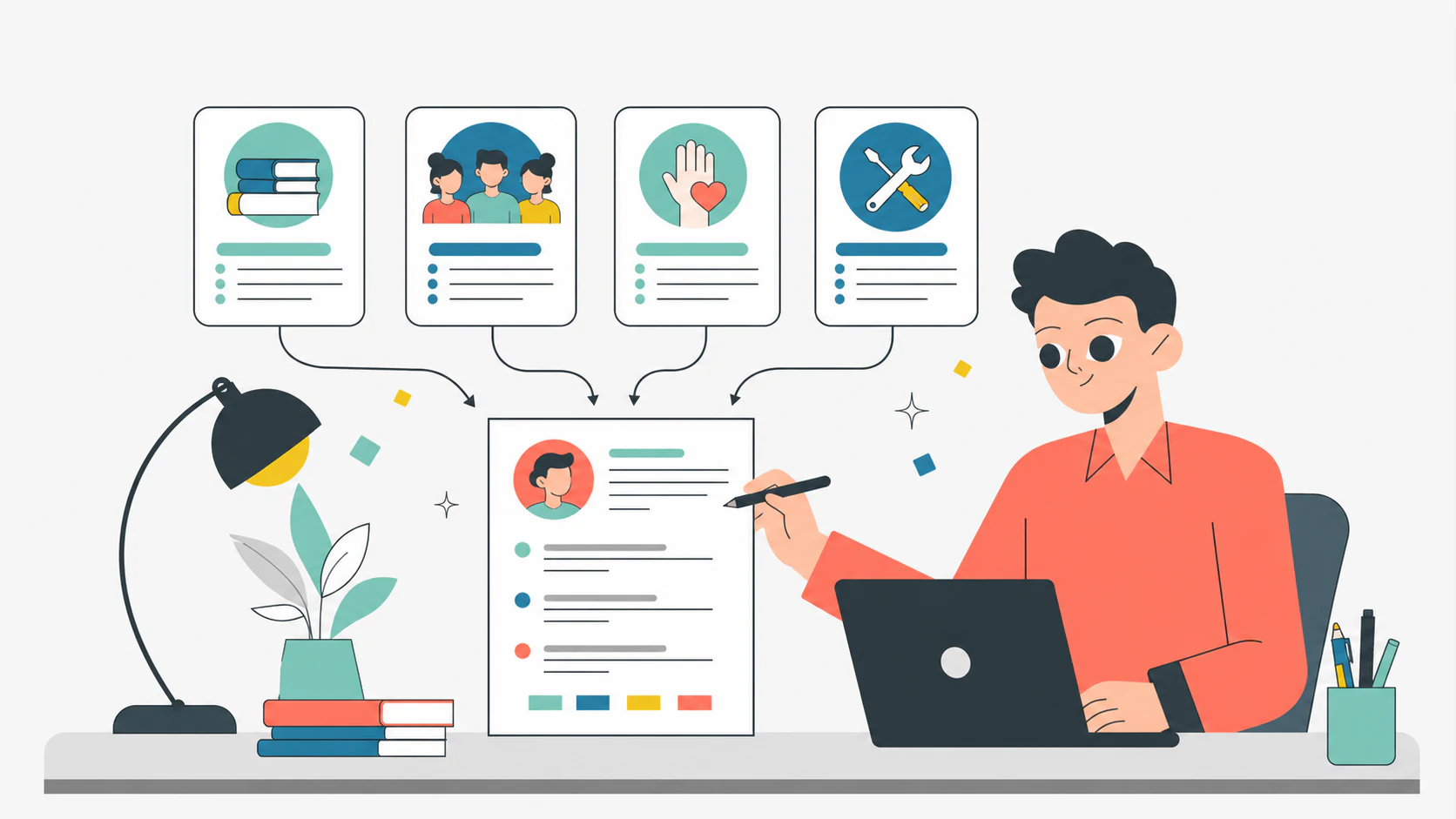
No work experience does not mean you have nothing to put on a resume. It means you need to show different evidence: education, projects, volunteering, activities, small responsibilities, and skills that can transfer into a real job.
A first resume should not pretend you already have a long career. It should show direction, reliability, and concrete proof that you can learn and contribute.
Core idea
A first resume does not need to look impressive at any cost. It needs to be specific, honest, and easy to read.
What employers look for when you have no experience
For entry-level roles, employers often look for signs of readiness: communication, responsibility, willingness to learn, organization, and the ability to finish tasks. Your resume should turn small experiences into readable evidence. Europass also recommends highlighting skills and experiences that match the vacancy, including education, work experience, skills and other achievements.
Sections that belong on a first resume
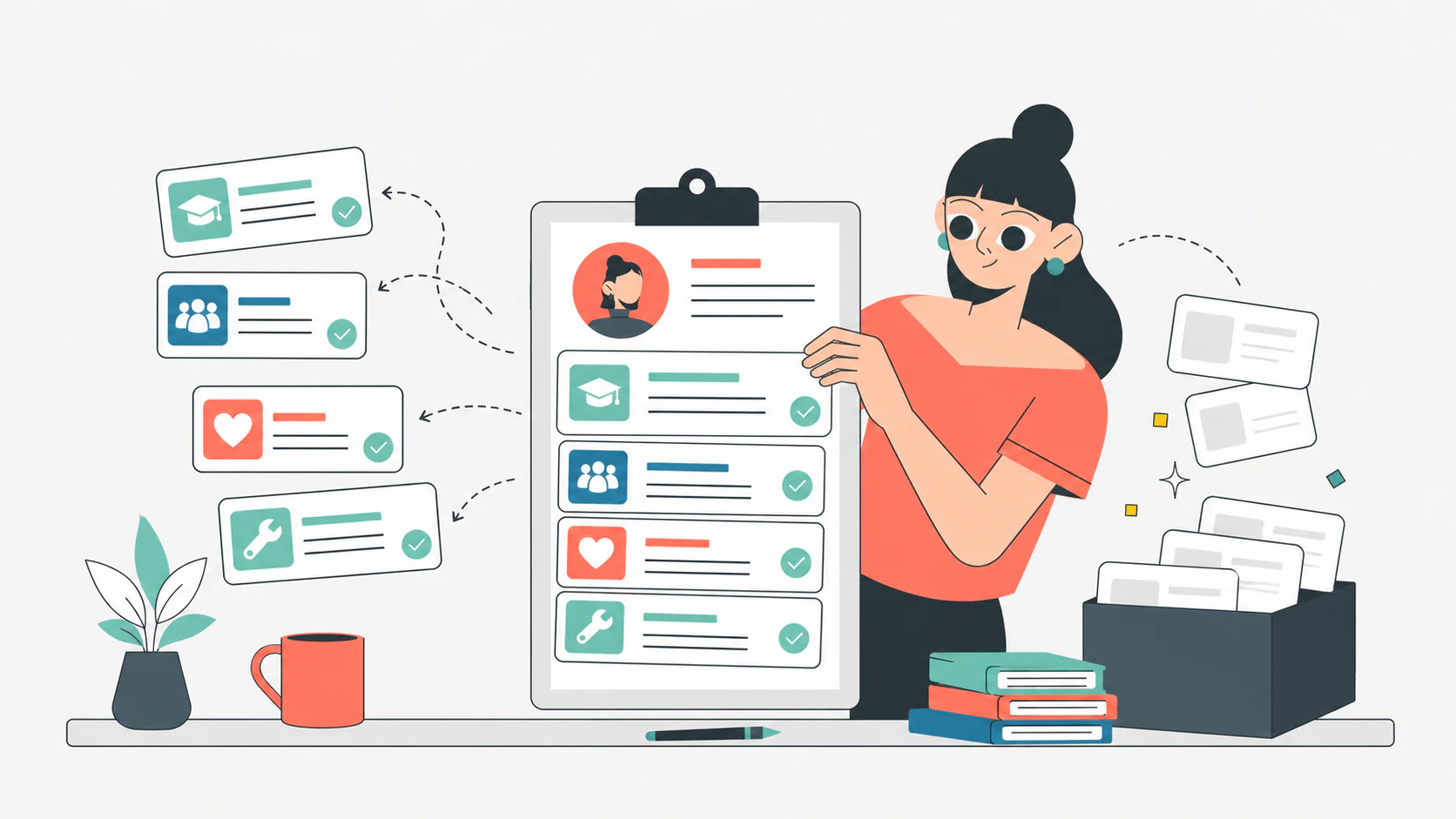
Choose sections with real substance instead of forcing a template to look full.
Summary: two specific sentences about your direction and target role.
Education: relevant courses, projects, grades, or achievements.
Projects: school, personal, digital, or community work with a visible output.
Volunteering and activities: real responsibilities, even if unpaid.
Skills: tools, methods, and behaviors you can support with examples.
No-experience resume reviewed with notebook, project notes, and pen on a desk
Weak:
Weak
Participated in a group project at school.
Stronger:
Stronger
Coordinated a 4-person student team for a research presentation, collecting sources, assigning tasks, and presenting findings to the class.
The University of Pennsylvania Career Services guide on resumes with no work experience points to coursework, certifications and virtual experience as useful evidence when paid work is missing. The practical point is simple: do not list only labels; describe what you did.

Mistakes that weaken a first resume
- Listing generic traits without proof.
- Hiding projects or volunteering because they were not paid work.
- Using a long template that creates empty space.
- Adding skills you cannot explain in an interview.
If you are also tailoring the CV to an offer, read the CVpop guide on ATS resume keywords. Keywords help only when they describe something real.
Final check before applying
Is the target role or direction clear?
Does the resume include examples from education, projects, or activities?
Is every important skill supported by a real example?
Can a recruiter scan it in less than one minute?
Did you adapt it to the job description?
FAQ
Should I say I have no experience?
No. Show what you do have: education, projects, volunteering, activities, responsibilities, and tools you can use.
Can my first resume be one page?
Yes. For a first resume, one clear page is usually stronger than two thin pages.
A first resume does not need to look impressive at any cost. It needs to be specific, honest, and easy to read.
Want to turn these tips into a ready resume?
Use CVpop to build, review, and tailor your resume with guided sections.
Create your resume